

Over the past few years, WordPress has evolved into a remarkably versatile platform for personal websites, business sites, and brand experiences. We stepped away from WordPress for a while, but now we’re back. At a certain point, we had to ask ourselves a simple question: does WordPress still make sense for us and for our clients?
The core requirements are usually the same. Clients want to be able to update, add, or remove content on their own. Very quickly, that extends beyond text changes into visual changes as well, and they want all of that without needing deep knowledge of HTML, CSS, or programming.
That’s where things get tricky. The demand for flexibility often collides with the limits WordPress used to have, or at least the limits many WordPress setups used to impose. Time and again, that meant diving back into the theme, building new templates, and wiring up custom functionality. At one point it became obvious that some projects would simply move faster as static sites built directly in HTML and CSS.
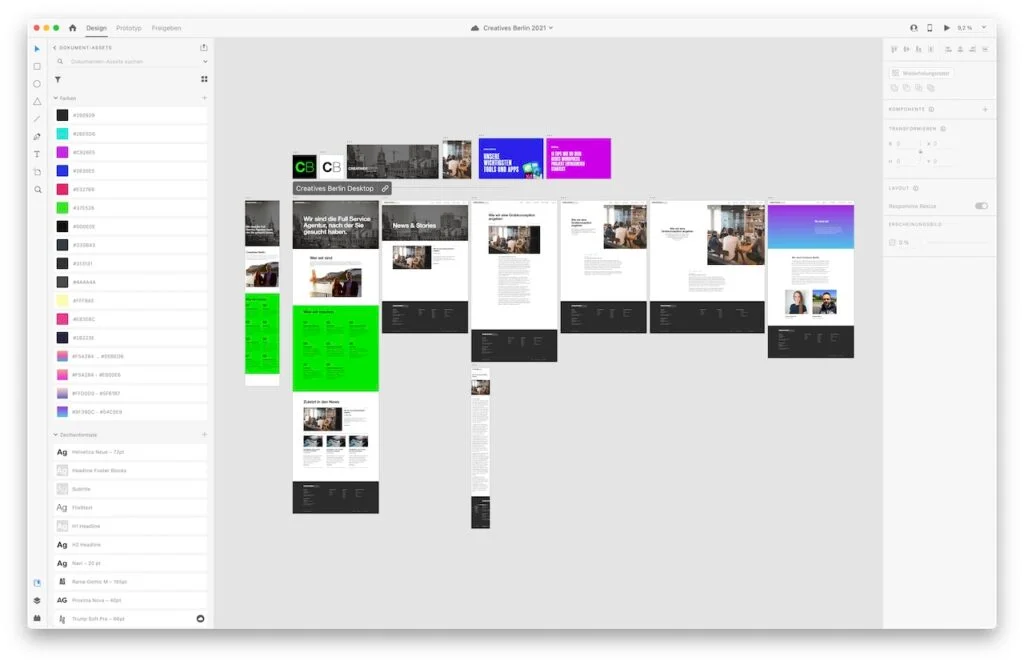
Webdesign with Adobe XD
On top of that, WordPress sites are constant targets for attacks. If you manage multiple WordPress installations, security hardening, plugin updates, and maintenance can become a real operational burden. That’s a problem you largely avoid with a static site.
So why WordPress after all?
The answer is pretty straightforward: under the hood, WordPress still offers more opportunities for brand building, content creation, and lead generation than a plain static site can in many cases.
For example, a pure HTML/CSS site doesn’t give you editorial workflows like scheduled publishing out of the box. WordPress does. On top of that, there are plugins for almost everything: newsletter integrations, CRM connections, and even full ecommerce setups.
And then there’s social media integration. Beyond automatic publishing, SEO plugins like Yoast SEO let you tailor thumbnails and teaser copy for individual channels, among many other things. The ecosystem is still incredibly powerful.
Another feature many users in Germany still overlook is Google-supported Web Stories based on AMP. Think of them as something like Instagram Stories, except they’re hosted on your own server, remain permanently available, and don’t disappear after 24 hours. They’re also prominently surfaced in mobile Google results and Google Discover.
How we work with WordPress now
The landscape has changed, and so have the requirements. Today, our focus is less on flashy editing tools and more on what makes a site fast, maintainable, and effective. We solved our old hesitation around visual change requests by choosing not to rely on page builder plugins like Elementor or Divi, which in our experience can slow down a WordPress installation considerably. Instead, we use Pinegrow, which we’ll write about in more detail another time.
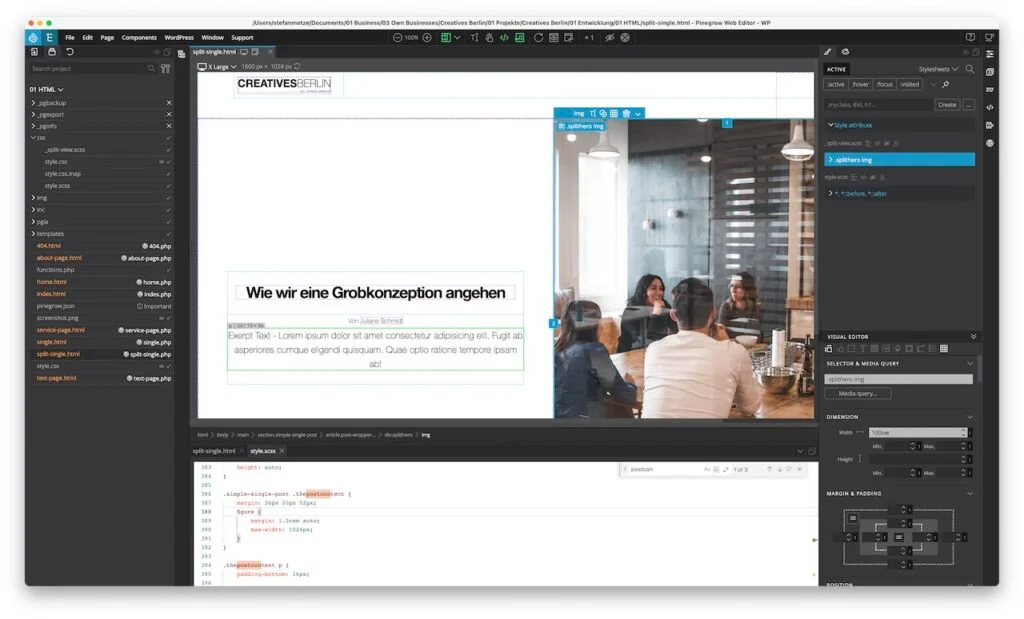
WordPress web editor Pinegrow
With Pinegrow, we can design and review responsive layouts in detail and then generate a genuinely clean WordPress theme from the underlying HTML and CSS. Right now, for us, that’s one of the best ways to build attractive websites with blog and CMS functionality for clients.
It lets us move quickly from Adobe XD designs into production-ready front-end code and turn that into a lean, fast-loading WordPress theme without rebuilding the same standard functionality from scratch every time, much like the site you’re reading right now.